
Residency Programs
- Four-Year Diagnostic Radiology Residency
- Five-Year Clinician Scientist Radiology Residency (T32 Grant)
- Integrated Interventional Radiology Residency
The American Board of Medical Specialties (ABMS) now recognizes interventional radiology as a distinct, stand-alone medical specialty, and the Accreditation Council for Graduate Medical Education (ACGME) has established program requirements for this new specialty. Our program obtained accreditation in 2016, and we offer two positions in the National Residency Matching Program (NRMP) Match. Medical students who know they want to specialize in interventional radiology may apply to the Integrated Interventional Radiology Residency Program at UC San Diego.
Train in both diagnostic and interventional radiology through a 5-year integrate curriculum.
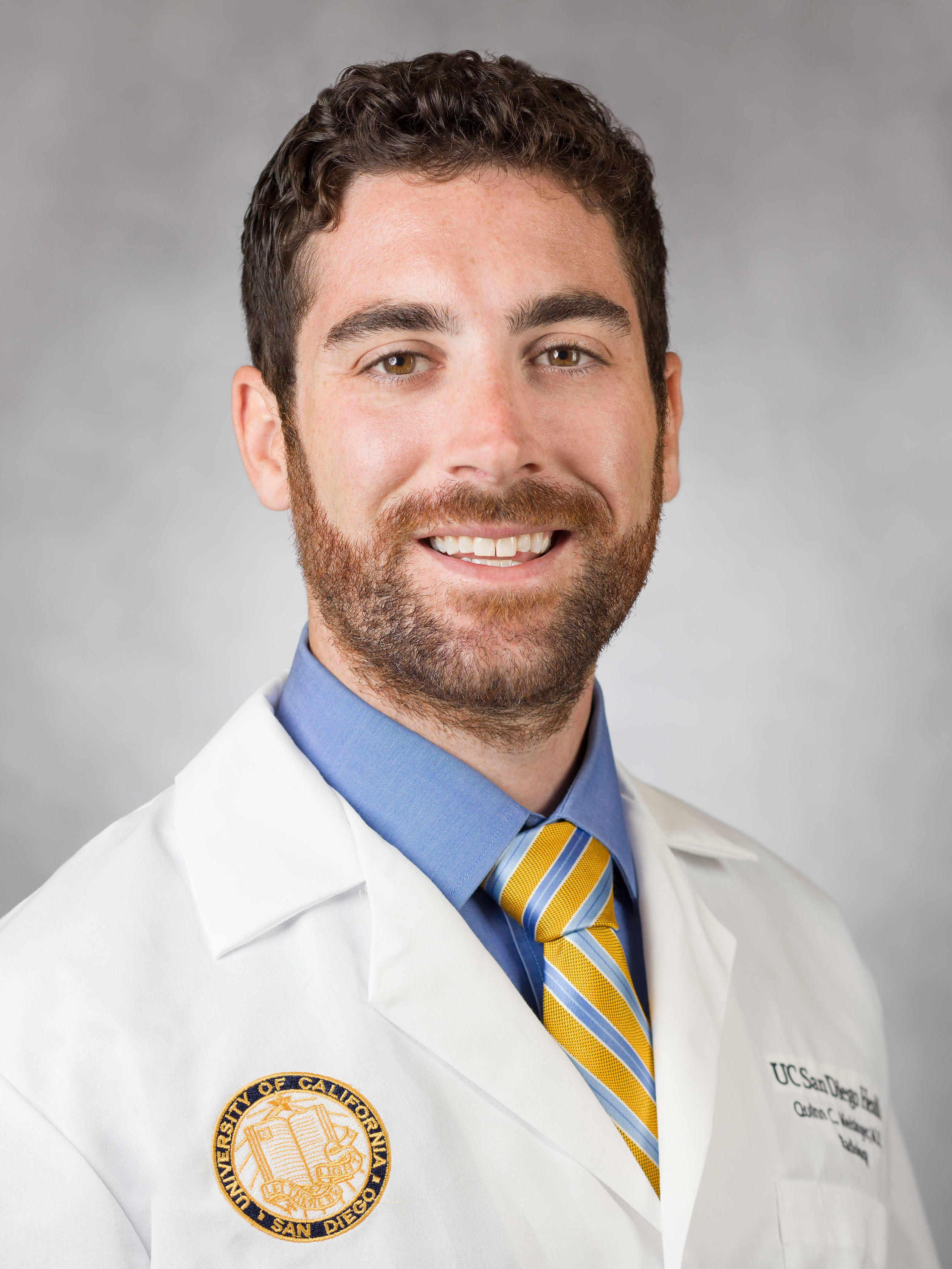
Quinn Meisinger, MD
Program Director
Interventional Radiology Residency
qmeisinger@health.ucsd.edu

Parikh, Rupal, MD
Associate Program Director
Interventional Radiology Residency
rrakowpenner@ucsd.edu
There are two ACGME-approved positions available in our Integrated Interventional Radiology Residency Program per year. The program is five years in length and focuses on diagnostic radiology during the first three years (see Four-Year Diagnostic Radiology Residency) and interventional radiology during the final two years. We also offer a unique six-year interventional radiology research track through the Clinician-Scientist Radiology Residency Program (CSRRP), designed to train and inspire interventional radiology physician-scientists to pursue substantive interventional radiology-related research. Graduates of the interventional radiology integrated residency qualify to take the interventional radiology/diagnostic radiology examination offered by the American Board of Radiology (ABR).
During the two-year training in Interventional Radiology, the UC San Diego interventional radiology resident is exposed to the clinical framework within which interventional radiology is practiced. The development of clinical skills, understanding of procedural indications, pre-operative and post-operative patient management, and proper identification and handling of complications are integral components of the training. Vascular imaging is an integral part of the training program. There are ample opportunities to engage in research during the residency. In addition, residents can rotate in various clinical services such as ICU, oncology, vascular surgery, urology, neurosurgery, nephrology, neurointerventional radiology, among others. The UC San Diego Division of Interventional Radiology participates in outpatient clinics, hospital admissions and inpatient consultations as part of its clinical service.
The Division of Vascular and Interventional Radiology at UC San Diego consists of 13 core, full-time interventional radiology faculty with seven physician extenders. Additionally, there are 15 adjunct IR faculty within other divisions and at other sites.
There are 12 interventional suites located at four hospitals: UC San Diego Medical Center at Hillcrest, UC San Diego Medical Center La Jolla Campus (Thornton Pavilion and Jacobs Medical Center), and the VA San Diego Healthcare System. In addition, residents rotate through Kaiser Permanente San Diego and Rady Children's Hospital.
At a minimum, residents should have the following experience over the course of four years:
Integrated IR residents (including IR/T32 residents) will frontload their night float months with eight weeks in the R2 year and eight weeks as an R3. They will also have 10 additional months of IR (which includes an ICU month) mostly in the R4 year.
Medical students who know they want to specialize in Interventional Radiology may apply to the UC San Diego Integrated Interventional Radiology Residency Program. The Integrated Interventional Radiology Program is considered an advanced program that starts at the PGY-2 level. For an internship, we encourage medical students to apply to a strong internship in medicine or surgery. The program has no preference for the geographical location of your internship.
For more information, check our Application Process page.

Our diverse clinical sites provide a comprehensive learning environment, exposing residents to a wide range of complex cases and state-of-the-art procedures. This multi-site approach ensures that our trainees gain the skills, knowledge and experience needed to excel in interventional radiology and beyond.